Thanksgiving Activities for Adults That Make the Evening More Fun
A Thanksgiving story can begin with a few innocent words: “Remember the year we…?” Ten minutes later, three people are correcting the details, somebody is laughing too hard to finish dessert, and the person who started it has lost control of the story entirely.
That’s the energy worth making room for. Thanksgiving activities for adults don’t need to interrupt a good dinner or turn your living room into a tournament. The best ones give people a reason to join in, then leave enough space for the evening to take its own turns. A little mischief with dessert is a good place to begin.
What are some memorable Thanksgiving activities for adults?
Start with something your guests already have in common: the food. A familiar dish can produce a surprisingly fierce debate about who makes it correctly. A new one gives everyone a reason to ask for the recipe. Either way, there’s more to talk about than how much turkey is left.
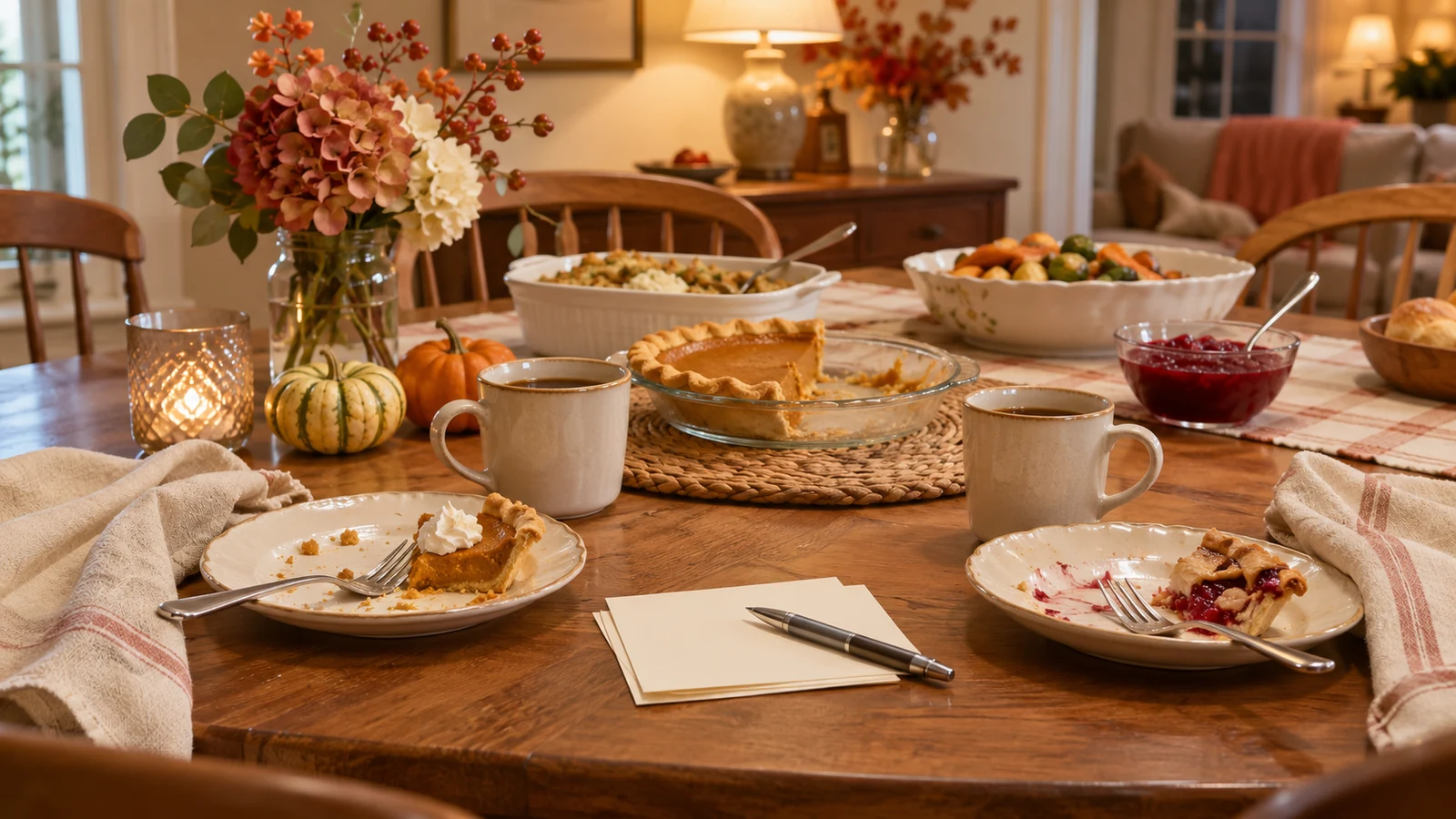
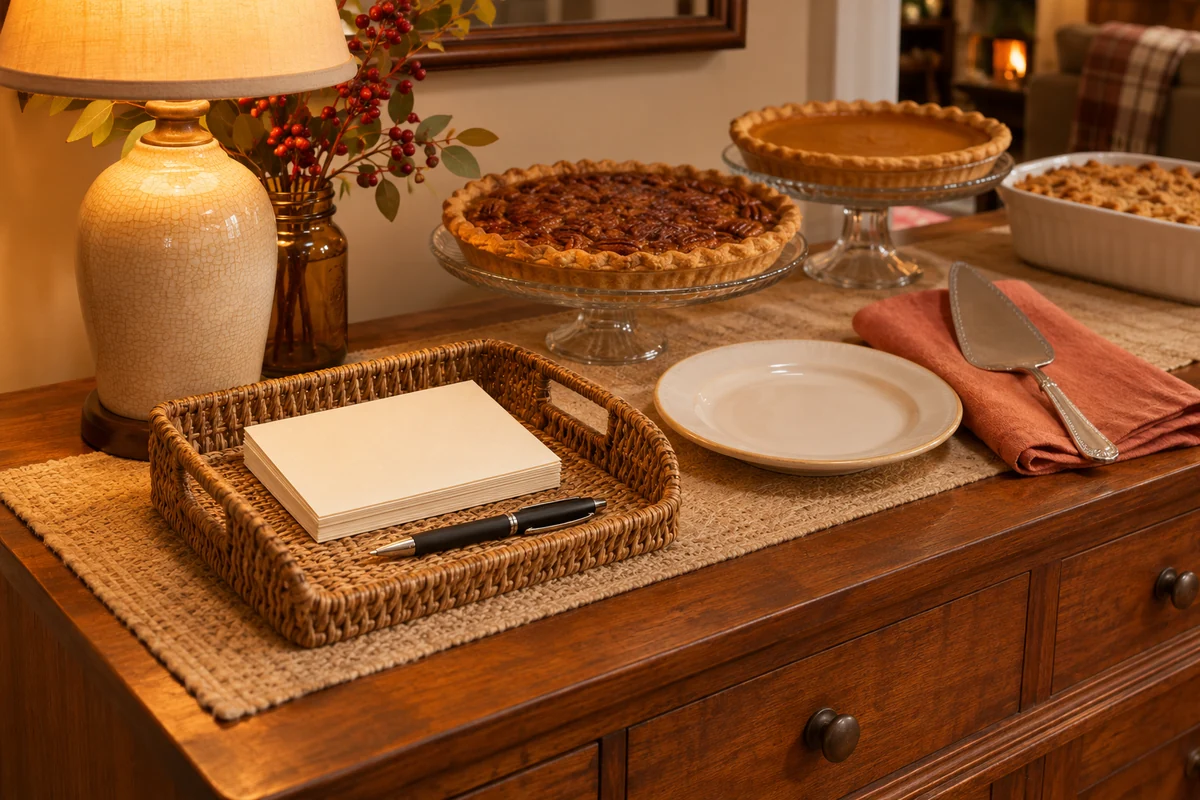
Before dinner, put a few blank cards and a pen beside the dessert plates. Invite anyone who brought a dish to write its name and one line about it: who taught them to make it, what they changed, or the step they nearly forgot. No speeches, no obligatory round of gratitude. When the pie comes out, ask two or three people to tell the story behind their cards. Let the conversation wander if someone has a better story to add.
At Friendsgiving, where guests may not share years of family memories, this works particularly well. People discover a little about one another through something they actually made or chose to bring. Leave the cards out afterward. Someone may want to copy a recipe, and somebody else may finally admit that the famous casserole came from a box.
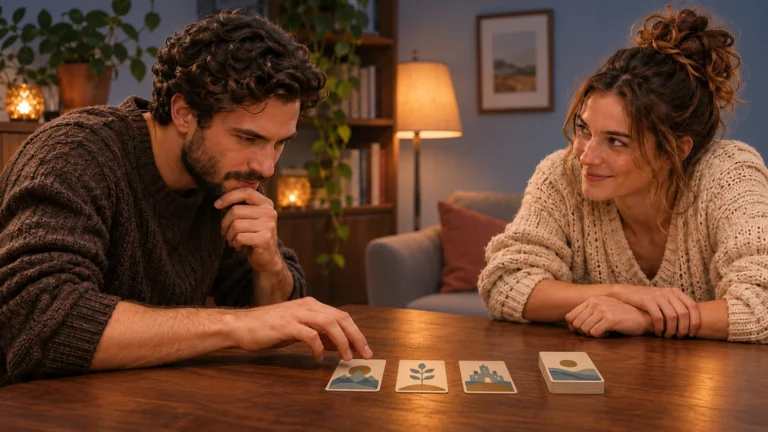
For a group that likes a clear goal, try picture bingo with prizes.
You can keep those cards with your Thanksgiving recipes and bring them back next year. That gives the evening a tradition without asking anyone to perform one.
What are some fun Thanksgiving games for adults?
The easiest Thanksgiving games for adults are the ones that fit the room you’re already in. If everyone is still sitting around the table, choose something with short turns and plenty of chances to react to one another. A quick trivia round or a conversation-based party game can work while the coffee is being poured. Once people drift into the living room, charades makes much more sense.
A familiar table warm-up is Two Truths and a Lie. Each guest shares three claims about a memorable holiday meal, two real and one invented. Everyone guesses the fiction. Keep the stories broad enough that new friends can join the guessing; the fun is in the explanation afterward, not in already knowing the answer.
Funny Thanksgiving games don’t have to be complicated. There’s a useful distinction here: a table game can draw quieter guests into the conversation, while an acting game gives the whole room something to watch. Neither has to become the official entertainment for the night. Tell everyone you’re trying one round. If they demand another, you’ve got your answer.
When choosing Friendsgiving games for a mixed group, avoid games that depend on knowing the family’s private jokes or remembering an event from fifteen years ago. Someone who has only met half the guests shouldn’t spend the evening wondering why everyone else is laughing. Choose prompts or questions that everyone can approach on equal footing, and let the stories that follow do the rest.
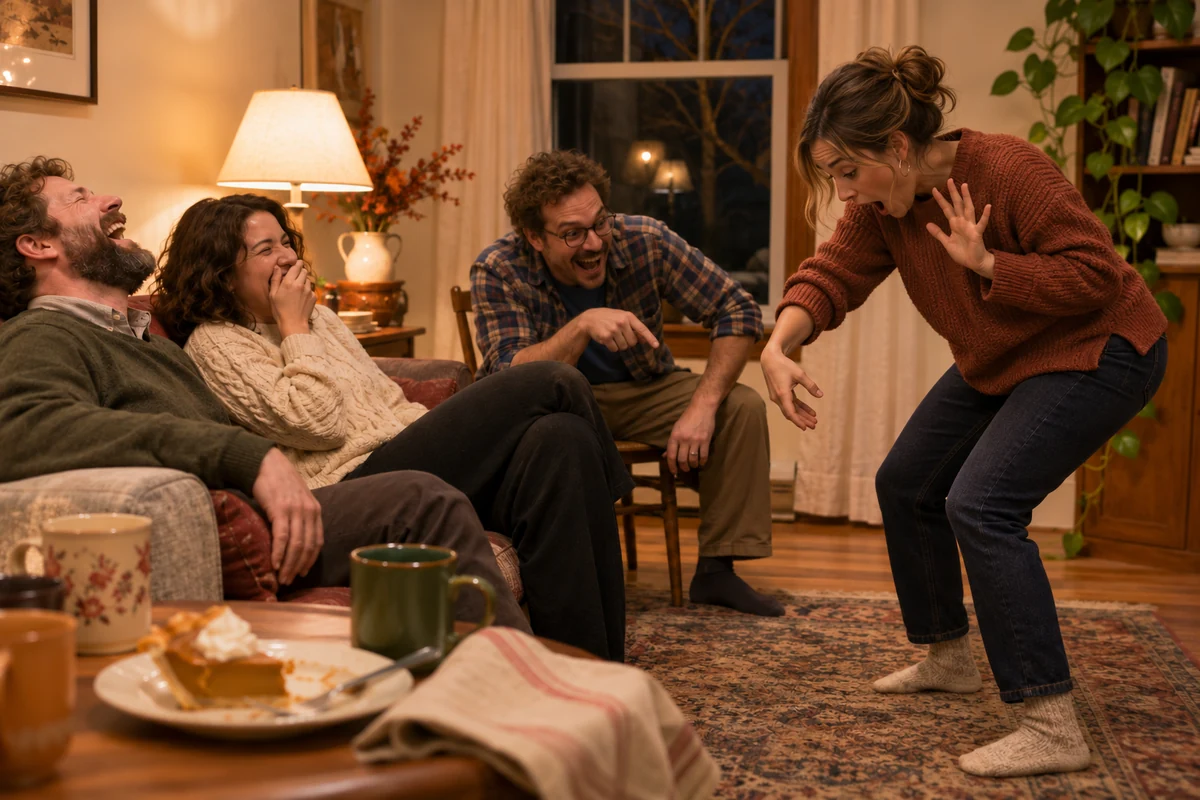
Charades comes into its own when people are ready to move about. Clear enough floor space for someone to act, keep the guessing group where they can see, and invite a willing performer to start. There’s no need to draft the shyest guest into a dramatic interpretation of a turkey. Guessing from the couch counts as joining in, just as it does in Christmas charades.
If your guests would rather stay seated, see our dinner party games for adults at the table for more ways to keep the fun close to the dessert plates.
How can you make Thanksgiving feel different this year?
Give the evening one small feature that feels like your gathering, rather than trying to schedule fun from the first appetizer to the last goodbye. For a family Thanksgiving, that might be the recipe cards you keep adding to every November. For Friendsgiving, it could be letting a different friend choose the after-dinner game each year. The tradition belongs to the group, not to a complicated hosting plan.
Imagine eight friends at the table. Dessert has arrived, one person is defending an unusual pie filling, and somebody across the table has a story about the first time they tried making it. Let that exchange have its moment. When the last plates are pushed aside and two guests migrate toward the couch, that’s your cue to offer a game. You’ve given people something to do without making them abandon what they were enjoying.
Keep both possibilities ready, but don’t insist on both. If the table is alive with conversation, the cards can stay on the sideboard. If the conversation has run its course, a fresh round is an invitation, not a rescue operation.
And when the evening turns a little louder, there’s an excellent argument for letting someone act out a Thanksgiving disaster rather than trying to explain it with words.